
Losing Organizational Identity Through AI-Generated Design
- May 13
- 7 min read
Why Graphic Design Skills Still Matter in the Age of Artificial Intelligence
By Romit Alfred
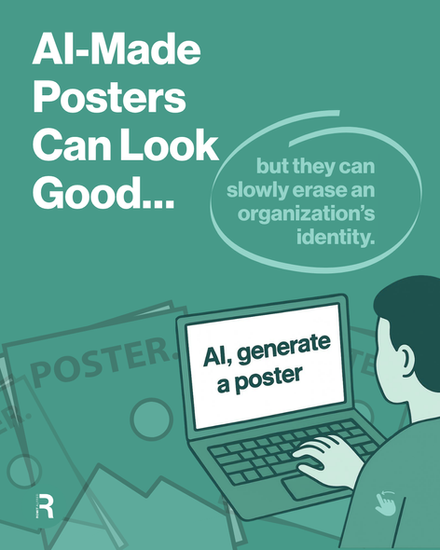
Artificial Intelligence has transformed the creative industry at an incredible pace. Today, anyone can generate posters, social media graphics, illustrations, and layouts within seconds using AI tools. For many organizations, this seems like a revolutionary solution: faster production, lower costs, and visually attractive content with minimal effort.
But behind this convenience lies an important question:
Are organizations slowly losing their visual identity by depending on AI-generated design without the guidance of skilled graphic designers?
As someone working in Graphic Design and Church communication for more than 11 years, I believe this is becoming one of the biggest creative and ethical challenges of our time.
Since 2015, I have been serving in Church communications at the AMCF Catholic Communication Centre in Mumbai, India. Over the years, I have worked on projects including the Archdiocese of Bombay website, social media communication, publications, campaign designs, and the Archdiocese Heritage Museum coffee table book.
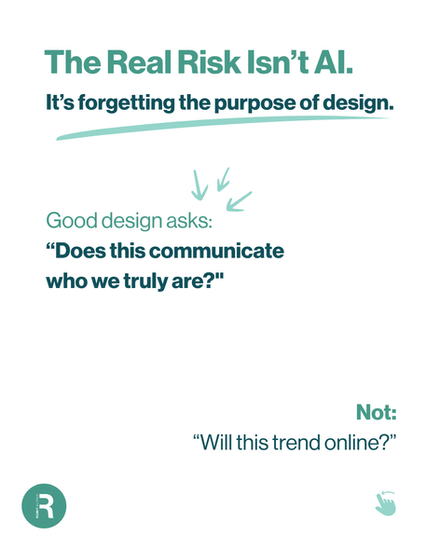
Working in a faith-based communication environment has taught me that design is not merely about creating attractive visuals. Design carries responsibility. Every poster, social media graphic, publication, or campaign reflects the identity, mission, and credibility of an organization.
Today, while using AI tools in my workflow — including Adobe Firefly integration, ChatGPT, Gemini, and other AI platforms — I have also witnessed how easily organizations can lose their visual identity when design decisions are made without foundational Graphic Design skills and communication thinking.
Design Is More Than Decoration
Many people mistake graphic design for simply “making things look good.” In reality, graphic design is visual communication. Every design decision — typography, spacing, color, imagery, composition, hierarchy, and symbolism — communicates meaning.[1]
A trained designer does not merely create visuals. A designer interprets:
the mission of an organization,
its values,
its audience,
and its identity.
Over the years, I have learned that the role of a designer in Church communication is similar to that of a translator. We translate values, faith, culture, and human stories into visual language.
AI can generate images quickly, but it does not truly understand the heart, history, culture, and purpose behind an organization.
The Rise of Generic Visual Culture
One growing problem with AI-generated posters is sameness.
When creators rely heavily on popular prompts and trends, many organizations begin to look visually identical:
cinematic lighting,
dramatic typography,
surreal imagery,
and over-stylized compositions.
Over time, organizations lose the uniqueness that once distinguished them.[2]
As someone designing communication materials regularly for Church audiences, I have noticed how visual inconsistency can slowly weaken trust and recognition. A Church ministry may begin to look like a corporate advertisement. A social initiative may start resembling entertainment content. The deeper identity behind the message slowly fades.
The visual identity dissolves into algorithm-driven trends.
Identity Is Built Through Consistency
Strong organizations are recognizable because they maintain visual consistency over time. Their identity is shaped through:
intentional typography,
color systems,
layout structures,
tone of communication,
and design philosophy.[3]
This consistency builds trust and recognition.
In my professional journey, one important lesson I learned is that audiences often remember organizations through repeated visual experiences. Consistent design builds familiarity. Familiarity builds credibility.
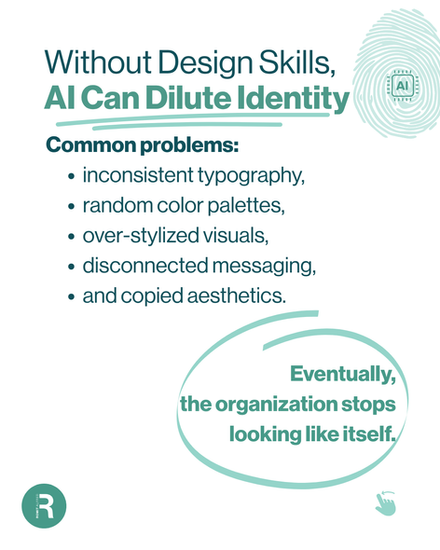
When posters are created randomly through AI tools without design understanding, the result is often:
inconsistent branding,
conflicting styles,
poor typography,
disconnected messaging,
and visual confusion.
Eventually, the audience no longer recognizes the organization’s authentic voice.
Pope Leo XIV and the Protection of Human Identity
In the 60th World Day of Social Communications message, Pope Leo XIV warned that technological innovation must serve the human person rather than replace human dignity.[4]
The theme chosen for World Communications Day 2026 — “Preserving human voices and faces” — directly addresses the growing concern that AI-generated communication can weaken authentic human identity and relationships.[5]
Pope Leo XIV emphasized that:
“The challenge is not technological, but anthropological.”[6]
He warned that systems capable of simulating human voices, creativity, empathy, and relationships risk reducing communication into artificial imitation rather than authentic human encounter.
This concern applies strongly to visual communication and graphic design.
When organizations overdepend on AI-generated visuals without human discernment:
authentic storytelling weakens,
visual identity becomes generic,
and communication loses its human face.
The danger is not simply poor aesthetics — it is the gradual loss of human authenticity.
AI Without Design Skills Can Become Dangerous
Artificial Intelligence is not inherently harmful. In fact, AI tools can significantly improve workflows for professional designers by assisting with:
brainstorming,
mockups,
image generation,
resizing,
automation,
and ideation.
Personally, AI has helped me speed up repetitive workflows, generate creative references, test visual ideas faster, and explore new communication possibilities. It has expanded my efficiency as a designer.
However, I strongly believe that AI should remain an assistant — not the creative director.
The problem begins when AI replaces design thinking rather than supporting it.
Without foundational design skills, creators may unintentionally:
imitate copyrighted styles,
spread misleading visuals,
create emotionally manipulative imagery,
or sacrifice clarity for visual spectacle.[7]
Pope Leo XIV also warned against communication becoming a world of “simulated relationships” and anonymous content disconnected from genuine human responsibility.[8]
This becomes especially important in Church communication, social work, education, journalism, and mission-oriented organizations where trust and authenticity are central.
Human Experience Cannot Be Automated
A designer’s identity is shaped through years of:
observation,
experimentation,
failure,
cultural understanding,
storytelling,
empathy,
and lived experience.
AI can imitate styles. But it cannot replicate human discernment.
My own design journey has been shaped not only by software skills, but by years of serving real communities, listening to people, understanding pastoral communication, collaborating with teams, and reflecting deeply on how visuals affect human emotions and faith experiences.
A skilled designer understands nuance:
when to simplify,
when to remain respectful,
how symbols affect audiences,
and how visual choices influence emotions and perceptions.
These are human responsibilities, not merely technical outputs.
The Responsibility of Organizations
Organizations today must ask important questions before fully embracing AI-generated communication:
Does this design truly reflect our mission?
Is our identity consistent?
Are we using AI ethically?
Are we valuing skilled creative professionals?
Are we communicating truthfully and authentically?
Technology should strengthen identity — not erase it.
A Better Path Forward
The future is not about rejecting AI.The future is about using AI responsibly.
The healthiest creative process combines:
Human creativity + Ethical AI assistance.
Graphic designers should continue learning:
design fundamentals,
communication strategy,
branding,
ethics,
and storytelling,
while also understanding how to integrate AI intelligently into their workflow.
As a designer currently pursuing further studies in Mass Communication and Journalism, I believe the future of communication will require both technological understanding and strong ethical discernment. Designers must become not only creators, but responsible communicators.
Organizations that preserve their human creative identity while using AI wisely will stand out in an increasingly automated world.
Why This Matters for Church Organizations
This reflection is especially relevant for Church organizations, diocesan bodies, parish ministries, and media cells that often struggle with maintaining consistency in their communication design.
In many cases, Church communication can unintentionally become more decorative than communicative. Posters may look visually attractive, but fail to reflect:
the identity of the parish or diocese,
the spirituality of the message,
consistency in communication,
or the pastoral purpose behind the content.
As someone working within Church communications, I have observed that many diocesan organizations and parish media cells genuinely desire better communication, but often lack:
trained design professionals,
visual communication guidelines,
structured branding systems,
and opportunities for creative formation.
This is where ethical Graphic Design and responsible AI usage can become valuable tools for ministry rather than distractions.
A strong visual identity helps Church organizations:
build trust,
improve clarity,
communicate more effectively,
engage younger audiences,
and maintain continuity across ministries and platforms.
More importantly, thoughtful design helps the Church communicate with dignity, beauty, authenticity, and hope.
Practical Solutions to Protect Organizational Identity
The solution is not to reject AI completely, but to build a healthier creative culture where technology supports skilled human communication.
Here are some practical ways organizations and creators can protect their visual identity while using AI responsibly:
1. Hire Skilled Graphic Designers
Organizations should recognize that Graphic Designers are not merely software operators. They are communication professionals who understand:
branding,
visual hierarchy,
storytelling,
typography,
audience psychology,
and identity building.
Investing in skilled designers helps organizations maintain consistency, professionalism, and authenticity.
2. Learn Design Fundamentals Before Depending on AI
AI tools become far more effective when users understand the basics of design.
Creators should learn:
typography,
color theory,
layout composition,
branding,
and communication principles.
Even beginner-friendly platforms like Canva provide valuable educational resources and courses that can help non-designers improve their understanding of visual communication.
3. Attend Workshops and Learn from Professionals
Workshops conducted by experienced designers and communication professionals can help organizations understand:
ethical use of AI,
brand consistency,
communication strategy,
and creative thinking.
Learning directly from professionals develops critical thinking that AI alone cannot provide.
4. Develop Clear Brand Guidelines
Organizations should create clear visual identity systems that include:
approved colors,
typography,
logo usage,
layout structures,
and communication tone.
These guidelines help maintain consistency even when AI tools are used.
5. Use AI as a Creative Assistant — Not the Final Authority
AI should support:
brainstorming,
mockups,
idea exploration,
workflow efficiency,
and repetitive production tasks.
Final communication decisions should still involve human discernment and professional review.
6. Encourage Ethical Communication Culture
Organizations should discuss:
copyright awareness,
transparency in AI usage,
authenticity,
misinformation,
and human-centered communication.
Ethics should become part of the creative process — not an afterthought.
7. Build Human Creativity Alongside Technology
The future belongs not only to people who know AI tools, but to those who combine:
creativity,
empathy,
communication thinking,
spirituality,
ethics,
and technology.
Strong human creativity will always remain the soul behind meaningful communication.
Conclusion
Artificial Intelligence can generate visuals instantly, but identity cannot be generated through prompts alone.
A meaningful organizational identity is built through intentional communication, consistent design, human understanding, and ethical creativity.
If organizations depend entirely on AI without the guidance of skilled designers, they risk becoming visually impressive but emotionally disconnected — attractive on the surface, yet lacking authenticity and recognizable identity.
After more than a decade in design and Church communication, I do not see AI as the enemy of creativity. Rather, I see it as a tool that requires wisdom, ethics, and human direction.
“AI can generate visuals.Graphic designers generate meaning, identity, and trust.”
Footnotes
[1] Interaction Design Foundation – Ethical Designhttps://www.interaction-design.org/literature/topics/ethical-design
[2] The Futur – Brand Identity Explainedhttps://thefutur.com/content/what-is-brand-identity
[3] Canva Design School – Brand Consistencyhttps://www.canva.com/learn/brand-consistency/
[4] Vatican – 60th World Communications Day 2026 Messagehttps://www.vatican.va/content/leo-xiv/en/messages/communications/documents/20260124-messaggio-comunicazioni-sociali.html
[5] Vatican News – Preserving Human Voices and Faceshttps://www.vaticannews.va/en/pope/news/2025-09/pope-vatican-theme-world-day-communications-human-voices-faces.html
[6] USCCB – Let communication be conducted by real human beingshttps://www.usccb.org/news/2026/let-communication-be-conducted-real-human-beings-not-ai-pope-says
[7] Adobe – Responsible AI Principleshttps://www.adobe.com/ai/overview/firefly/responsible-ai.html
[8] OSV News – Pope Leo XIV on AI and Communicationhttps://www.osvnews.com/pope-leo-gives-programmatic-message-on-ai-in-first-world-communications-day-message/
About the Author
Romit Alfred is a Senior Graphic Designer and Church communicator based in Mumbai, India, with more than 11 years of experience in visual communication and media ministry at the AMCF Catholic Communication Centre. His work includes website design, publications, social media communication, branding, and creative projects for the Archdiocese of Bombay.
Studied MA in Mass Communication and Journalism, he is passionate about ethical communication, creative identity, and the responsible use of AI in design. Romit actively explores how technology and design can serve truth, hope, and authentic human communication within the Church and society.
The reflections, experience, perspective, and core message are authentically mine, while AI assisted in structuring, refining, and expanding the content.










Comments